JLPT Mainichi JLPT
English
← All lessons

JLPT N4 · MONEY / VALUE

貝=お金・財産

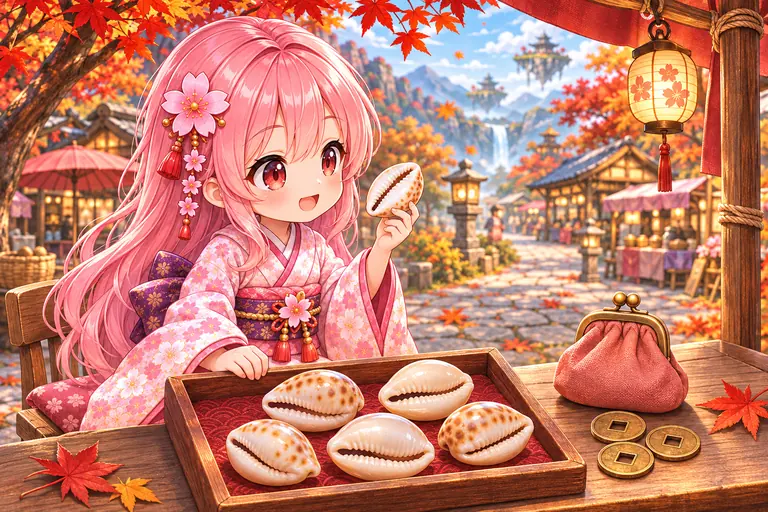
In ancient China, cowrie shells were used as money. The character 貝 began as a picture of a cowrie shell. That history helps explain the 貝 in 買 (buy), 費 (expense) and 資 (funds): the shared part points to money.

Buying and lending both contain 貝: shells were once money.

Build a memorable kanji

買 buy

バイ・かう

  • 罒 net shape
  • 貝 money

The top 罒 represents a net, and 貝 represents money. Kanjipedia explains 買 through gathering shells in a net, with the meaning later extending to buying. Knowing that shells served as money makes the connection to shopping easier to understand.

Origin reference

貸 lend

タイ・かす

  • 貝 wealth
  • 代 sound part

貝 connects to wealth and 代 supplies sound. You may lend a book or a bicycle today, but 貸 retains its wealth-family component. Compare 借, with a person, and 貸, with a shell.

Origin reference

Learn the word and its sound

Buying obtains something; lending hands it over to be returned. Connect both through the wealth radical, then learn each action in its own word.

Radical origin reference

宀=屋根・家 · Read the lesson →

Launch special — Free Pro campaign now on

Launch special

Free Pro campaign now on

Study kanji, vocabulary, grammar, listening, reading and mock exams in one app. Use Pro features for free during the campaign.

Available worldwide except Nepal. Regions and campaign details may change. Check the app for current availability.

Open on your phone

Mainichi JLPT

QR code

Scan with your camera to get the app on your phone.

safa-lang.com/download/jlpt/